Inspirational journeys
Follow the stories of academics and their research expeditions
Why Strategic Thinking Is One of the Most Important Management Skills

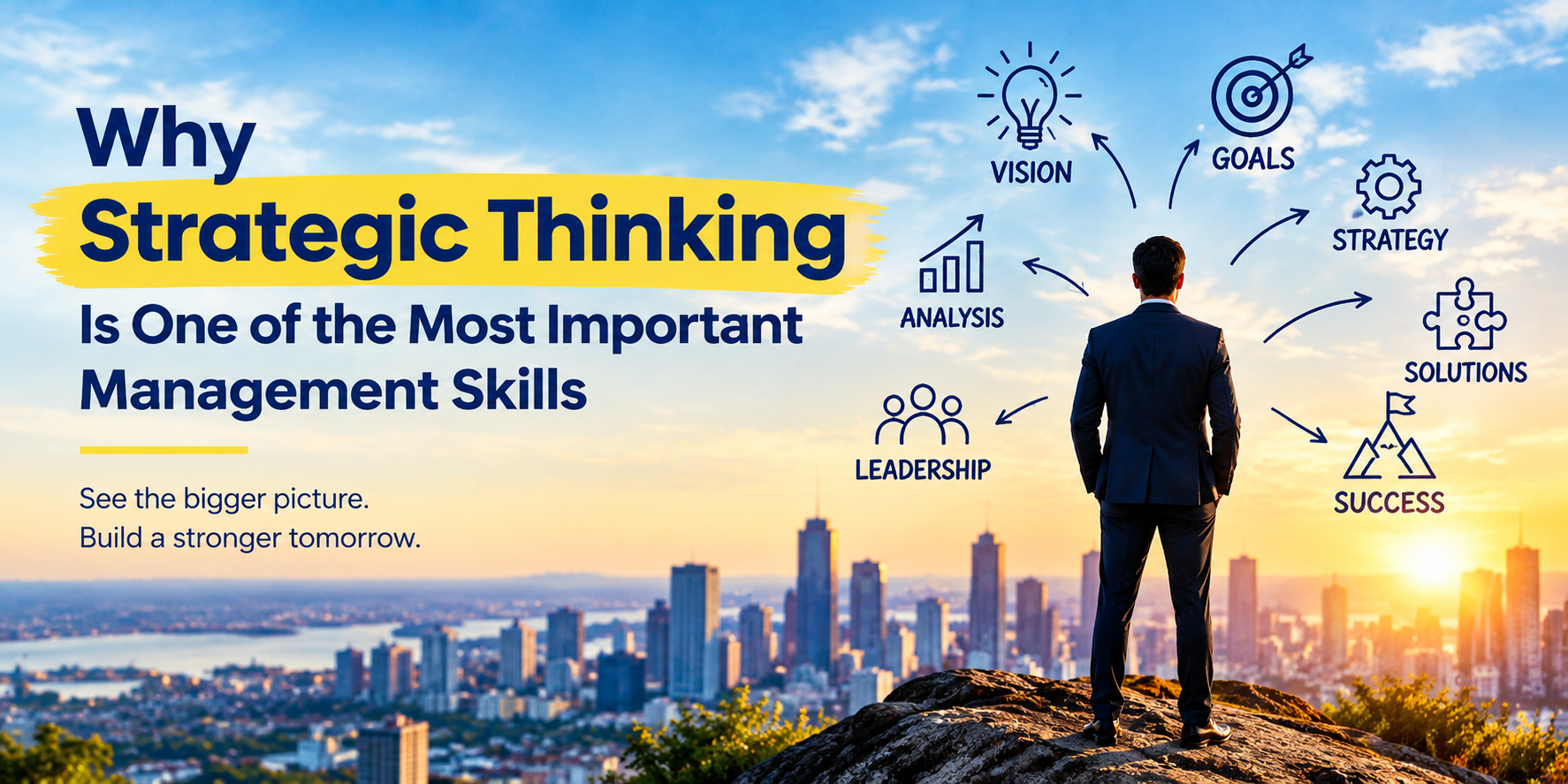
In today's rapidly changing business environment, organizations face constant challenges. Technology is evolving, customer expectations are changing, competition is becoming more intense, and businesses must respond quickly to new opportunities and risks. In such an environment, managers need more than technical knowledge or the ability to complete daily tasks. They need the ability to understand the bigger picture and make decisions that support long-term success.
This ability is known as strategic thinking.
Strategic thinking is one of the most important management skills because it helps managers look beyond immediate problems, understand future possibilities, evaluate alternatives, and make informed decisions. Whether someone is managing a small business, leading a department, or running a large organization, strategic thinking can significantly influence professional and organizational success.
What Is Strategic Thinking?
Strategic thinking is the ability to look at a situation from a broader perspective and consider how present decisions may affect future outcomes.
A manager who thinks strategically does not focus only on the question, "What needs to be done today?" Instead, they also ask:
- Where is the organization heading?
- What opportunities could emerge in the future?
- What risks could affect the business?
- What are our competitors doing?
- What do customers really need?
- How can we use our resources more effectively?
- What decisions today will create value tomorrow?
Strategic thinking combines analysis, creativity, foresight, problem-solving, and decision-making. It allows managers to connect individual actions with larger organizational goals.
Why Is Strategic Thinking Important for Managers?
1. It Helps Managers See the Bigger Picture
Managers often deal with numerous daily responsibilities. Meetings, deadlines, employee issues, customer requirements, financial decisions, and operational problems can consume much of their time.
Strategic thinking helps managers step back from these immediate concerns and understand how different activities are connected.
For example, reducing costs may appear to be a good short-term decision. However, if cost reduction results in lower product quality or poor customer service, it may negatively affect the organization in the long run.
A strategic manager considers both the immediate consequences and the long-term impact before making a decision.
2. It Improves Decision-Making
Effective management depends heavily on good decision-making.
Managers frequently have to make decisions without having complete information. Strategic thinking provides a structured approach to evaluating available information, identifying alternatives, assessing risks, and considering potential outcomes.
Instead of making decisions based purely on assumptions or short-term pressure, strategic managers consider how each option supports the organization's overall objectives.
This leads to more thoughtful and sustainable business decisions.
3. It Helps Organizations Adapt to Change
Change is a permanent part of modern business.
New technologies, economic conditions, customer preferences, regulations, and competitors can change the business environment quickly. Organizations that fail to adapt may lose their competitive position.
Strategic thinking encourages managers to monitor changes and prepare for different possibilities.
For example, the growth of artificial intelligence is changing how organizations approach customer service, marketing, finance, human resources, and operations. A strategic manager does not simply react after change occurs. They consider how emerging technologies could affect the organization and prepare employees and processes accordingly.
4. It Supports Long-Term Planning
Strategic thinking is closely connected with long-term planning.
An organization needs clear goals and a practical direction. Managers must determine where they want their teams or businesses to be in the future and identify the resources and actions required to reach those goals.
Strategic thinking helps managers move from simply reacting to problems toward proactively planning for the future.
A strong strategic plan can provide direction for areas such as:
- Business growth
- Marketing
- Human resources
- Finance
- Technology
- Product development
- Customer relationships
- Market expansion
5. It Creates Competitive Advantage
Businesses operate in competitive markets. Having a good product or service is not always enough. Organizations also need to understand what makes them different and why customers should choose them.
Strategic thinking helps managers analyze competitors, market trends, customer needs, and organizational strengths.
By identifying opportunities that competitors may overlook, organizations can develop new products, enter new markets, improve services, or create more effective business models.
In this way, strategic thinking can become an important source of competitive advantage.
Strategic Thinking and Leadership
Strategic thinking is also an essential leadership skill.
A leader must provide direction and help people understand why their work matters. Employees are more likely to contribute effectively when they understand the organization's objectives and how their individual responsibilities support those objectives.
Strategic leaders communicate a clear vision, encourage innovation, consider different perspectives, and help teams prepare for future challenges.
They do not simply tell employees what to do. They create an environment where people understand the purpose behind their work and are encouraged to think about solutions.
How Can Students Develop Strategic Thinking Skills?
Strategic thinking is not limited to senior executives. Management students can begin developing this skill from the beginning of their academic and professional journey.
Develop Analytical Skills
Learn to examine information carefully before reaching conclusions. Understand data, identify patterns, compare alternatives, and evaluate risks.
Follow Business and Industry Trends
Reading business news and studying changes in different industries can help students understand how external factors influence organizations.
Learn From Real Business Cases
Case studies provide an excellent opportunity to understand how organizations respond to challenges. Studying successful and unsuccessful business decisions can improve strategic judgment.
Ask "Why" and "What If?"
Strategic thinkers constantly ask questions. Why is something happening? What could happen next? What if the market changes? What alternative solutions are available?
Developing this habit can improve critical and strategic thinking.
Think Beyond Short-Term Results
Students should learn to consider both immediate and long-term consequences. A decision that produces quick results may not always create sustainable value.
Strategic Thinking in the Age of Artificial Intelligence
Artificial intelligence is making strategic thinking even more important.
AI can process large amounts of information, automate repetitive tasks, identify patterns, and support decision-making. However, managers still need to determine what questions to ask, which objectives matter, how risks should be managed, and how technology should be aligned with organizational values.
The future manager will therefore need to combine technology awareness with human judgment.
Strategic thinking can help managers use AI as a business tool rather than simply following technological trends without a clear purpose.
Conclusion
Strategic thinking is one of the most valuable management skills because it enables professionals to look beyond immediate tasks and focus on long-term organizational success. It improves decision-making, supports adaptation, encourages innovation, strengthens leadership, and helps organizations identify opportunities in competitive markets.
For management students and aspiring professionals, developing strategic thinking early can provide a significant advantage throughout their careers.
Management education should therefore go beyond textbooks and theoretical concepts. Students should be encouraged to analyze real business situations, understand market trends, solve complex problems, evaluate alternatives, and think about the future.
In a business world defined by constant change, the ability to think strategically today while preparing for tomorrow can make the difference between simply managing an organization and truly leading it toward sustainable growth.


Leave a comment